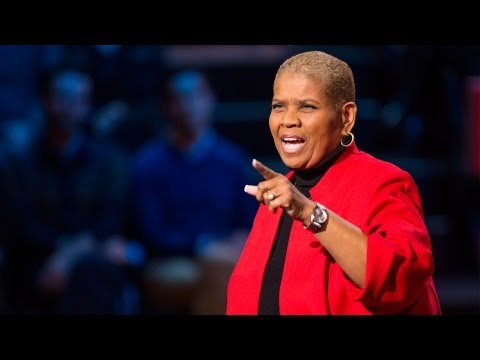
Every kid needs a champion-Rita Pierson
All Things Early Childhood
Wednesday, March 3, 2021
When I Think of Child Development...
Saturday, February 20, 2021
Assessing The "Whole Child"
I think children should be assessed throughout the school year on skills they will need to be successful in the workplace, which you will not find on a standardized test. Students should be assessed on their creativity, their problem solving skills in real time, and how they work in a group. I also think they need to be exposed and assessed on how well they can use technology, because technology is becoming a big part of the future. Job applications are done online now, they need to know how to type a resume, and do other basic computer functions. It is important to asses academics as well, but this can be done informally throughout they year, it does not and should not be based strictly on standardized assessments. I found an article on Education Week that gave a great example, "A standardized test asks students to name the steps of the scientific method. Wouldn’t it make more sense to have students do a science project that demonstrates their understanding of the application of the scientific method? And since projects can be set at any level, such an assessment would be perfect for special-needs students of all types" (Lee, E., 2016).
New Zealand
In New Zealand primary school is ages 5-6 (Years 1-6). According to the New Zealand Education website, students are regularly assessed in reading, writing, and math against expectations for their age level which is set by New Zealand's National Standards. This sounded like they take standardized assessments, but it wasn't clear to me so I continued searching. According to the New Zealand Learning System website they eliminated national standards in 2018. It goes on to say that this was done to acknowledge that children learn at different rates, and to enable teachers to provide a broader range of learning opportunities for students (New Zealand: Learning Systems - NCEE). The website goes on to say that there are no national tests the first 10 years of school, assessments take place internally at the school level. There are two sampling tests given in grades 4 and 8 to monitor the nations progress, but these tests do not have consequences for students or teachers (New Zealand: Learning Systems - NCEE).
References:
Lee, E., (2016). Let's Assess the Whole Child. Let's Assess the Whole Child (Opinion) (edweek.org)
New Zealand Education website New Zealand education system - NZ school system | Study in New Zealand
New Zealand Learning Systems New Zealand: Learning Systems - NCEE
Saturday, February 6, 2021
Consequences of Stress on Children's Development
As I have mentioned previously, I
just recently found out that one of my students spent the first 2 years of his
life living in poverty, isolation, and neglect. Both of his parents abused
drugs, and they left him in his crib, alone in his bedroom. From what we were
told, parents would go in a couple times a week to give him food, but that was
it. When CPS found him, he was naked in his crib with feces everywhere, and was
extremely malnourished. Because of how he lived this first 2 years of his life
he was severely delayed cognitively, physically, socially/emotionally,
adaptively, and in the area of communication. Luckily his great aunt adopted
him, and immediately started getting him early intervention services. Other
than cognitive and communication, he is developmentally where he should
be.
A previous student of mine who I
had from 2nd grade to 6th grade (now in 8th grade), has been experiencing some
severe social/emotional struggles this year. Back in December it was learned
that he had attempted suicide and had a plan to try again. He was hospitalized
for about 4 weeks and is now receiving counseling. He struggled with being
quarantined and out of school for so long (March-September), he lost two family
members to Covid, upon returning to school he had to quarantine two different
times due to being in direct contact with someone who was positive, and several
of his classmates/friends had to quarantine on different occasions. I have
heard at church and in the news that mental health issues are higher than they
have ever been due to Covid, and quarantining.
The things that children have to
face on a daily basis is heartbreaking.
Monday, January 18, 2021
Child Development and Public Health
Sudden Infant Death Syndrome (SIDS)
I wouldn't say that SIDS is necessarily meaningful to me, but I do find myself perplexed by this awful syndrome. SIDS is the unexplained death, usually during sleep, of a seemingly healthy baby of less than a year old (Mayo Clinic, nd). Although the cause is unknown there are several physical and sleep environmental factors that could make an infant more vulnerable (Mayo Clinic, nd). The physical factors are: brain defects, low birth weight, and respiratory infections; sleep environmental factors: sleeping on stomach/side, sleeping on a soft surface, sharing a bed w/parents, overheating; risk factors include: sex, age, race, family history, secondhand smoke, being premature; maternal risk factors include: being younger than 20, smoking cigarettes, using drugs/alcohol, and inadequate prenatal care (Mayo Clinic, nd). Prevention suggested by the May Clinic includes putting baby on their back to sleep, keep crib as bare as possible, don't overheat the baby, have baby sleep in your room (not in your bed), breastfeed if possible, and offer a pacifier. In 2017 about 1,400 infants died due to SIDS in the US (Rakicevic, M., 2020).
In the 1980's New Zealand had the highest rate of SIDS (Cot Death) than any other developed country. The government initiated the National Cot Death Prevention Programme in 1991. Their goal for this program was to reduce the number of SIDS deaths among Caucasians and Maori (native people to New Zealand). The program focused on reducing the number of pregnant women who smoked, to increase breastfeeding, and maintain side and back sleep positions for infants (Centre for Public Impact, 2016). The programme reported that the fall in SIDS mortality rates were dramatic, and have continued to decline (Centre for Public Impact, 2016).
References:
Centre for Public Impact, (2016). New Zealand's National Cot Prevention Programme
New Zealand’s National Cot Death Prevention Programme - Centre for Public Impact (CPI)
Mayo Clinic, (n.d.). Sudden Infant Death Syndrome.
Sudden infant death syndrome (SIDS) - Symptoms and causes - Mayo Clinic
Rakicevic, M., (2020). 23 SIDS Statistics and Facts Every Parent Should Know.
23 SIDS Statistics and Facts Every Parent Should Know (disturbmenot.co)
Saturday, January 16, 2021
The Birth of my God Daughter
On December 10, 2005 my best friend went into labor. When I got the call from her husband I immediately went into panic mode thinking "No, this can't be happening, not now, it's too early", and I rushed to the hospital. The thing is...she was only 26 weeks pregnant, Jozlyn wasn't due for another 3 months. I was able to go into her room when I arrived at the hospital. Adrian (my best friend) was a little loopy with everything they were giving her to try and stop labor. As I stood by her bed side looking at all the machines that were hooked up to her, and the doctors and nurses buzzing about, I was terrified but knew I had to remain strong for Adrian. I'm not sure how long she had been in labor when I heard someone say "We lost the baby's heartbeat, we have to go now." At that point I was ushered out of the delivery room as they prepped Adrian for an emergency c-section. After what seemed like forever, we were told Jozlyn was here weighing only 1 pound 10 ounces, and she was being flown down to a hospital in Phoenix, we lived in Flagstaff at the time and they were not equipped to handle a preemie so young. Mom was doing well, and was being moved to a room to recover. We were able to see Jozlyn before they air lifted her to Phoenix, she was so tiny and fragile, and I immediately fell in love with this little girl like she was my own. Jozlyn was able to come home before he due date without any oxygen, and was meeting her milestones and progressing better than anyone could have hoped. Jozlyn is now 15 years old, the kindest most loving person you will ever meet. She is in numerous clubs in school, and excels academically. She has no health issues, and you would never know that she was born at 26 weeks. Jozlyn is a true miracle baby in my eyes.
Here is a picture of Jozyln when she was 1 day old.
References
Scherer, J., (2016). What options are there for having a baby in New Zealand.
What options are there for having a baby in New Zealand? | Stuff.co.nz
Saturday, December 26, 2020
Thank You!!!
I have learned so much from everyone these past 8 weeks. Thank you for participating in discussions in a deep and meaningful way. Thank you for sharing your experiences and expertise in the education field. I honestly feel like I have learned so much from everyone, it's hard to pick just a couple classmates to thank.
So this thank you is for everyone!
Thursday, December 17, 2020
NAEYC and DEC Codes of Ethics
Professional
Development and Preparation (DEC Code of Ethics)
It’s important for educators to stay
up date on the latest trends in the education field. I am constantly attending
trainings, and taking classes so I can be knowledgeable in early childhood which
allows me to advocate for my students. Because I’m in the special education
realm there is a lot of legal guidelines tied to what I do. Laws are constantly
changing and I need to be aware of what changes to ensure my students are
getting what they need, but also so I don’t get sued.
Ethical
Responsibilities to Children (NAEYC Code of Ethical Conduct)
Ideal: I-1.1- To be familiar
with the knowledge base of early childhood care and education and to stay
informed through continuing education and training (NAEYC Code of Ethical
Conduct, 2005).
This ideal is very important to me
right now because I’m in the process of building my knowledge base in early childhood
education through this master’s program. I also just realized that this ideal
ties into the Professional Development and Preparation Ideal from the DEC Code
of Ethics. In order to appropriately advocate for your students, you need to be
knowledgeable and trained in your field.
Ideal I-1.8- To support the
right of each child to play and learn in an inclusive environment that meets
the needs of children with and without disabilities (NAEYC Code of Ethical
Conduct, 2005).
This ideal embodies my job! I am a
special education teacher for 2 inclusive developmental preschool rooms (rooms
have students with and without disabilities). Many of my students have speech/language
delays, as well as social/emotional delays. Having them in a class with gen ed
peers allows them to learn from their peers. They are interacting and playing
with their peers, and they are showing so much growth already.
Ethical
Responsibilities to Colleagues (NAEYC Code of Ethical Conduct)
Ideal: I-3A.1- To establish and
maintain relationships of respect, trust, confidentiality, collaboration, and
cooperation with co-workers (NAEYC Code of Ethical Conduct, 2005)
In my new position this year I work
closely with 2 preschool facilitators (gen ed teachers) and 4
paraprofessionals. I have never worked with a team this big, so it was
important to build relationships, and trust with each person. Beyond that, I
had to begin working on repairing relationships between paras and facilitators
that were not in good standing from the previous year. We also have had to
learn how to collaborate together, but all this is necessary in order for our
preschool program to run smoothly.
When I Think of Child Development...
Every kid needs a champion-Rita Pierson I absolutely LOVE this video. Rita talks about how important building relationships with your stud...
-
I think children should be assessed throughout the school year on skills they will need to be successful in the workplace, which ...
-
Thank you to Dr. Embree and all my classmates for a wonderful first class! I have learned so much from everyone these past 8 weeks. Thank ...
-
As I have mentioned previously, I just recently found out that one of my students spent the first 2 years of his life living in pover...